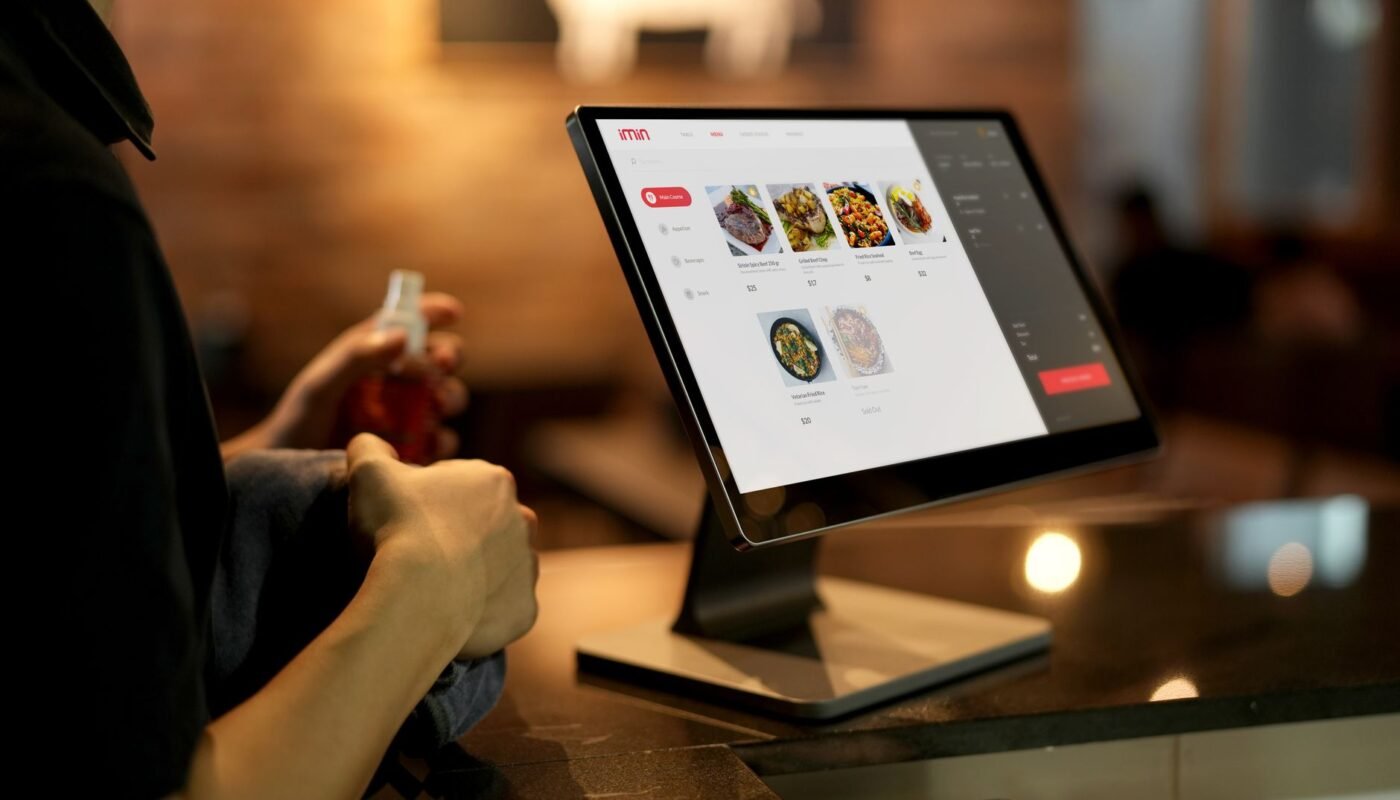

Lightspeed Commerce reported fiscal second-quarter revenue of $323.8 million on November 5, with payments volume reaching 45% of total transaction value. The quarter is the first full one without Upserve, the U.S. restaurant product line Lightspeed sold on April 28, and the release shows how much of the company’s restaurant business now sits in Europe.
Restaurant groups that run Lightspeed, or are comparing it with Toast, Square or a hotel-owned POS, get two things from the filing: a payments attach rate they can ask any vendor to match, and a clear statement of where Lightspeed intends to sell restaurant software.
What Lightspeed reported
According to Lightspeed’s second quarter fiscal 2027 results, total revenue was $323.8 million. That is 15% higher on an organic basis and 2% higher as reported, because the prior-year quarter still contained Upserve. Gross profit was $142.8 million. Subscription revenue was $97.8 million and transaction-based revenue was $213.9 million.
Advertisement

Gross payment volume was $11.6 billion against $10.8 billion a year earlier. Total gross transaction volume was $25.8 billion against $25.3 billion. Payments as a share of volume reached 45%, up from 40% on an organic basis a year ago (43% as reported).
Chief executive Dax Dasilva said “Lightspeed’s advanced POS, payments and AI-driven insights helped complex, multi-location retailers and restaurateurs grow in the quarter.” The company reports retail and hospitality together, so the release does not give a restaurant-only revenue line.
What the Upserve sale removed
In its April 29 announcement, Lightspeed said it sold its Upserve U.S. hospitality product line to Skyview Equity for up to $81 million in cash, $37 million of it subject to an earnout.
The divested operations contributed about $140 million of revenue, about $26 million of gross profit and about $5 billion of gross transaction volume in fiscal 2026. The deal covered about 3,200 U.S. hospitality customer locations and about 70 employees. Dividing the company’s own figures gives roughly $1.6 million of annual volume per location, a figure that is our own arithmetic and not one Lightspeed published.
Skyview’s Bob Bellack, interim chief executive of Upserve, said “Upserve has earned a remarkable reputation with independent restaurants.” Lightspeed said the analytics technology from Upserve stays inside Lightspeed Insights, part of its Restaurant product.
Where the restaurant business is now
Lightspeed calls its two growth engines retail in North America and hospitality in Europe. Across them, revenue grew 17%, volume grew 14% and payments reached 50% of volume, against 46% a year earlier. Customer locations in those engines rose by about 800 in the quarter and were up 8% year over year to about 99,000. Total locations were about 146,000, so roughly 47,000 sit outside the two engines.
The hospitality wins named in the release are European: The McManus Pub Company in the UK, Hotel Le Place d’Armes in Luxembourg with four restaurants, Domaine and Demeure in southern France and The Indie Group in Paris, Saint-Tropez and Courchevel. The North American wins listed are all retail.
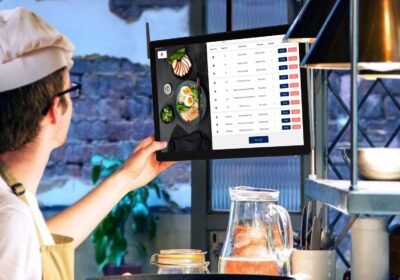
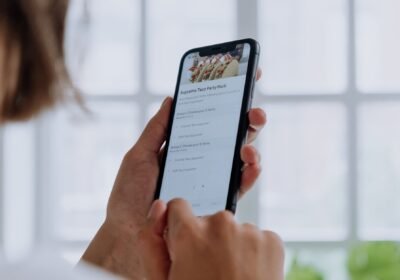
Product work named for the quarter was restaurant-heavy. It included AI-generated charts that become live dashboard tiles, Reserve with Google support in Lightspeed Reservations, a customer-facing display with an 8-inch screen and integrated payments, and Scan to Pay, where a guest scans a code on the receipt to split the bill, tip and pay from a phone. Two of those, Scan to Pay and Reserve with Google, were covered when Lightspeed added them to its restaurant POS in October.
The cost of the payments push
The same release shows what a higher payments share costs. Overall gross margin was 44%, against 46% on an organic basis a year earlier. Transaction-based gross margin was 32%, flat on an organic basis. Subscription gross margin rose to 84% from 82%.
Lightspeed Capital, its merchant cash advance product, produced $15.0 million of revenue, up 42% organic. Lightspeed grew outstanding advances by $26.0 million in the quarter, and the release attributes the drop in operating cash flow, to negative $7.5 million from positive $25.5 million, mainly to that growth. Adjusted free cash flow was $4.0 million against $18.0 million. Chief financial officer Asha Bakshani said “We remain focused on scaling these high-growth markets and translating that growth into sustained profitability and cash generation.”
After the quarter, the company said it carried out further reorganization and cost reductions as part of a planned three-year transformation. The release gives no headcount or savings figure.
What it means for operators
Three groups have something to check.
- Former Upserve customers in the U.S. now deal with Skyview Equity. Contract terms, payment processing agreements and the integration roadmap are worth confirming in writing, because the buyer’s plan is described only in general terms in the April release.
- Restaurant groups in the UK and Europe are the segment Lightspeed is investing in. The release lists Reserve with Google and Scan to Pay among the quarter’s product work.
- Any operator pricing a POS contract can use the payments figures as a benchmark. Lightspeed’s transaction-based revenue was more than twice its subscription revenue this quarter, so the processing rate in a quote carries much of the price. Operators who bring their own processor should ask whether subscription pricing changes.
Hotel groups running restaurants, spas and shops on one platform are watching the same market from the other side. Cloudbeds launched a POS for hotel outlets that posts charges to the room, a different route to the food and beverage till in a hotel. Lightspeed named Hotel Le Place d’Armes in Luxembourg, with four restaurants, as a customer win.
What to watch next
Lightspeed’s next results will show a clean year-over-year comparison without Upserve in either period. The figures to watch are payments share of volume, which has now passed the 45% mark, and whether the growth-engine location count keeps rising by roughly 800 a quarter. Digital sales at chains such as Chipotle, where digital reached 38.8% of food and beverage revenue, show the volume that restaurant POS vendors are competing to process.
Source: Lightspeed Commerce Inc., second quarter fiscal 2027 results (PR Newswire)